A Subang Girl
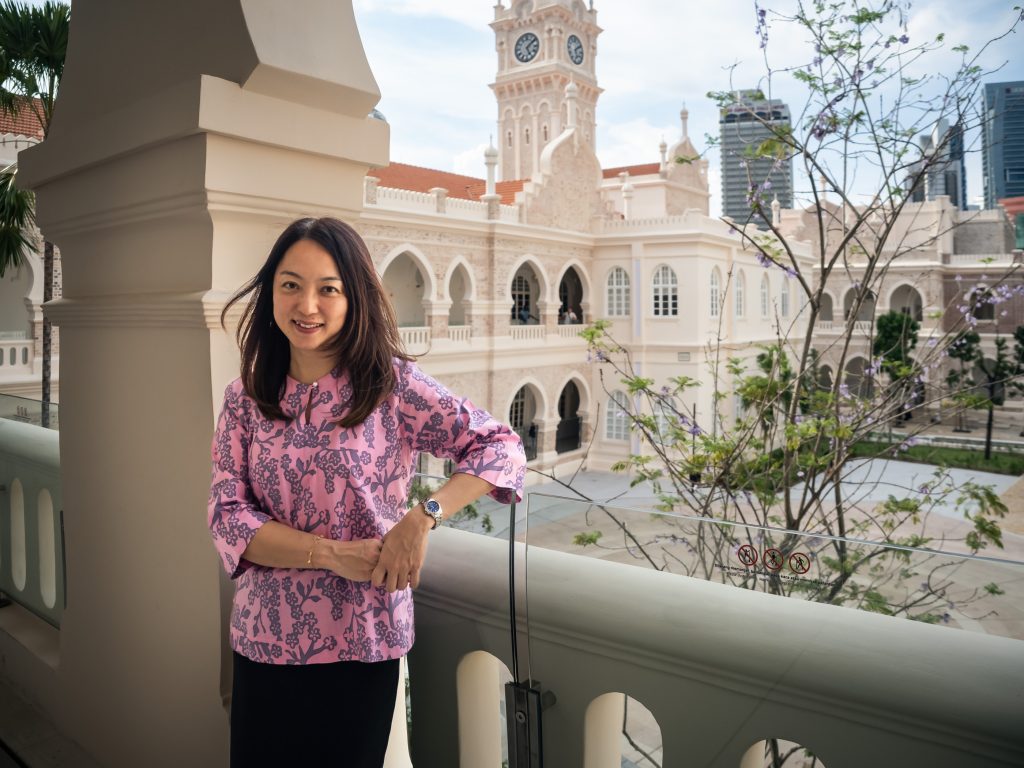
Hannah Yeoh grew up renting.
Not in one place, but several. Moving from section to section across Subang Jaya as her father, a printer, found what the family could afford. SS14, SS18 and finally SS19. Primary school in one neighbourhood, secondary school in another. No fixed address, no asset to speak of, just a father who worked for people and a mother who kept the home together. And yet Hannah remembers her childhood not with loss, but with something close to gratitude. The freedom of walking to school along monsoon drains. Catching tiger fish in the streams of what would become USJ. Growing up in a Subang Jaya so easy between its communities that the question of whether a friend was Malay, Chinese or Indian, she says, simply never arose.
“I am a Subang girl through and through,” she told me. And sitting with her in her ministerial office at Dewan Bandaraya on a bright April afternoon, that is exactly what she feels like. Not a minister performing accessibility, but someone who genuinely remembers what it is to be ordinary, to move around on your own, to know a place by its back lanes and monsoon drains rather than its landmarks.
She is, of course, anything but ordinary now. Hannah Yeoh is Malaysia’s Federal Territories Minister, the custodian of Kuala Lumpur, overseeing a city budget of three billion ringgit. But the story of how she got here, and what she has carried with her, begins not in any parliament or courtroom, but in a small house in Subang Jaya, when she was seven years old.
Her father made them kneel.
She and her sister, born the same year, raised like twins, in the same school and the same class, had fallen into a careless habit. A classmate named Helen always had more pocket money than she could spend, and had taken to giving her coins away. The coins bought curry puffs. It felt like generosity received, not something taken. Until Helen’s mother came to school, and the trail led back to the two sisters, and the teacher who lived next door went home and told their parents.
That evening, her father hit her palm once with a ruler. It was the only time in her life he ever raised a hand to her. Then he said: “I’m poor, but we don’t steal. You do not take money that does not belong to you.”
She has never forgotten it. She does not expect to.
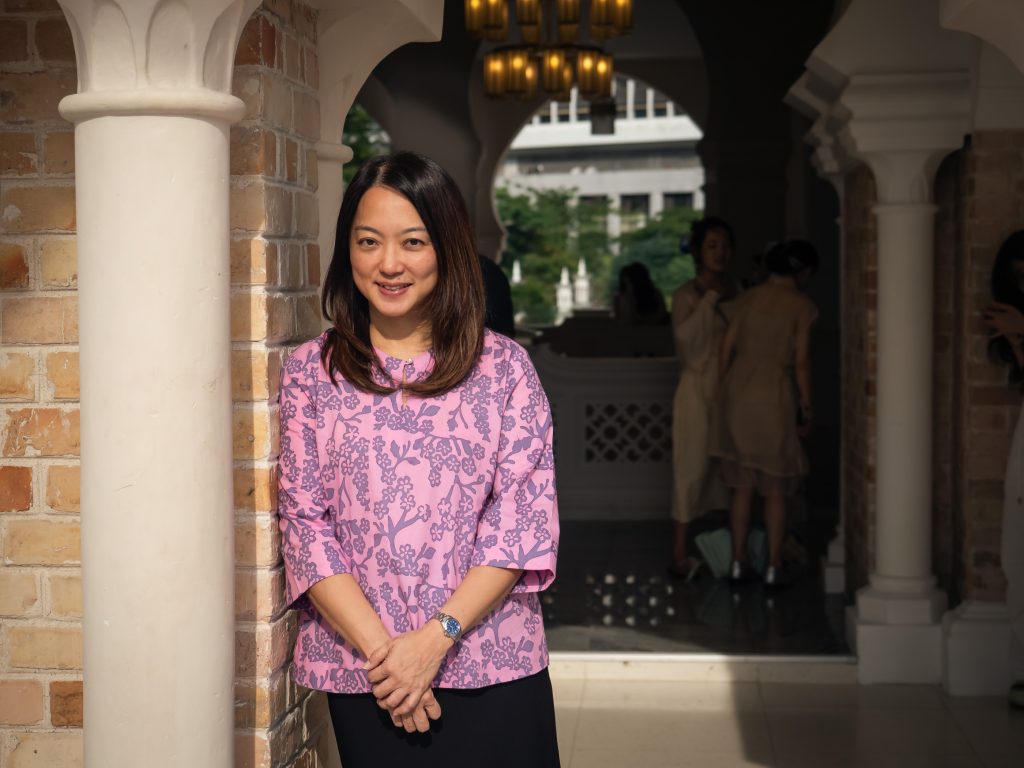
“I will not steal money that does not belong to me,” she said. And the line runs in a straight thread from that evening in Subang Jaya, through decades of public life, all the way to the three billion ringgit budget she now holds. Conviction and integrity, she believes, are not developed overnight. They are built in moments like that one, in the quiet severity of a parent who has very little and refuses, precisely because of that, to let it become an excuse.
This is what her father gave her. Not wealth. Not connections. A ruler across a palm, and words that became a life.
There was another shaping, quieter but just as deep. When Hannah was ten, she lost a favourite uncle, her mother’s younger brother, one month before his wedding. He was young, an electrician at the Proton factory, driven enough to buy himself a Sony Walkman to learn English on his own time. He fell at work, just ten feet, and did not survive. His wedding portrait became his funeral portrait. Watching her grandparents grieve without answers sent her searching. At eighteen, she became a Christian, and her faith has been with her since. It is not something she keeps private or separate from her public life. She believes her entry into politics was not ambition but a high calling, lived out through a daily display of conscience, integrity and good works.
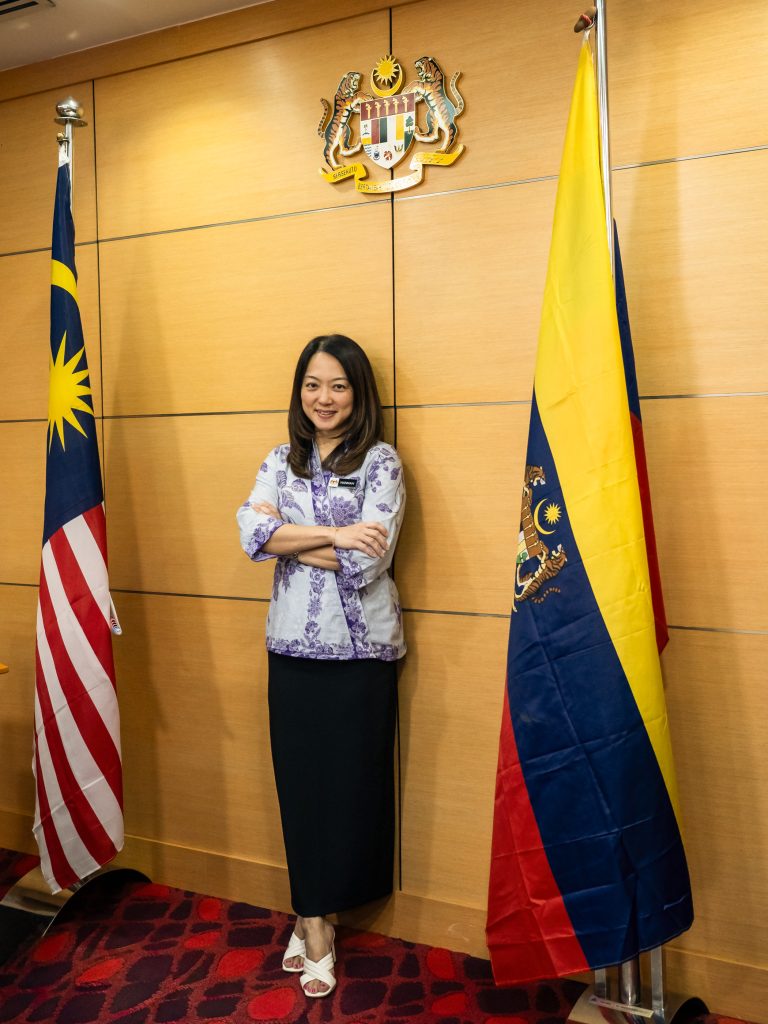
She describes herself, with a certain wryness, as an accidental politician.
When she stood for Subang Jaya in 2008, she did not expect to win. She was twenty-nine, a lawyer, an unknown name. The decision to stand had come from a conversation with a friend who had grown tired of her complaints. “Why don’t you make a difference?” the friend said. She met Tony Pua. It was decided. She stood.
Before all of that, she had imagined a different life entirely. She had studied law in Australia, and when she graduated, she had tried to stay. Applied for permanent residency. The application was rejected, and she came home. Not quite by choice, not quite by accident. Looking back, she reads it as something more deliberate than either. “What I miss most about joining politics,” she admitted, with the candour that tends to surface when she is not speaking for the record, “is that I gave up my youth. I often imagine what I would have done or explored in my 30s had I not been in politics.”
But she stayed. She has always stayed. And what holds her here, she says without hesitation, is love for this country. Complicated, frustrating, full of possibility, warmth, humour, and resilience. “What holds me here is the belief that this country is worth the effort. And perhaps more importantly, that people here deserve leaders who stay, who listen, and who keep working even when the conversation becomes difficult.”
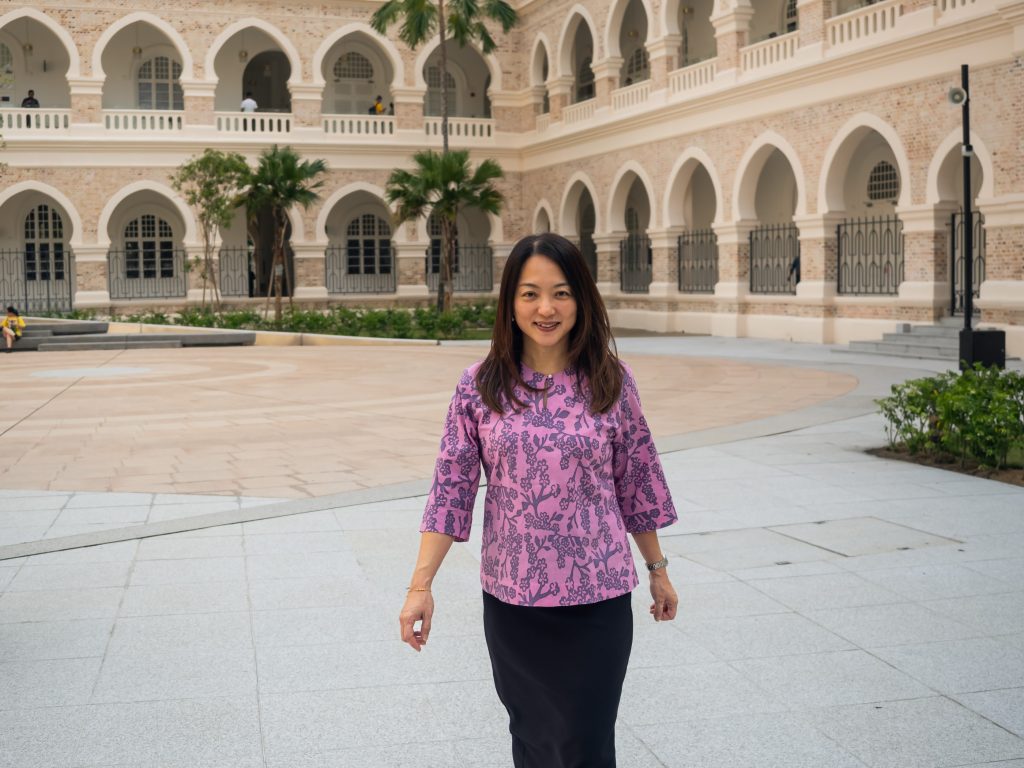
Malaysia held on to Hannah Yeoh before she ever chose to hold on to it. The rejected PR application, the friend’s challenge, the unexpected election result. She did not plan any of it. And yet here she is.
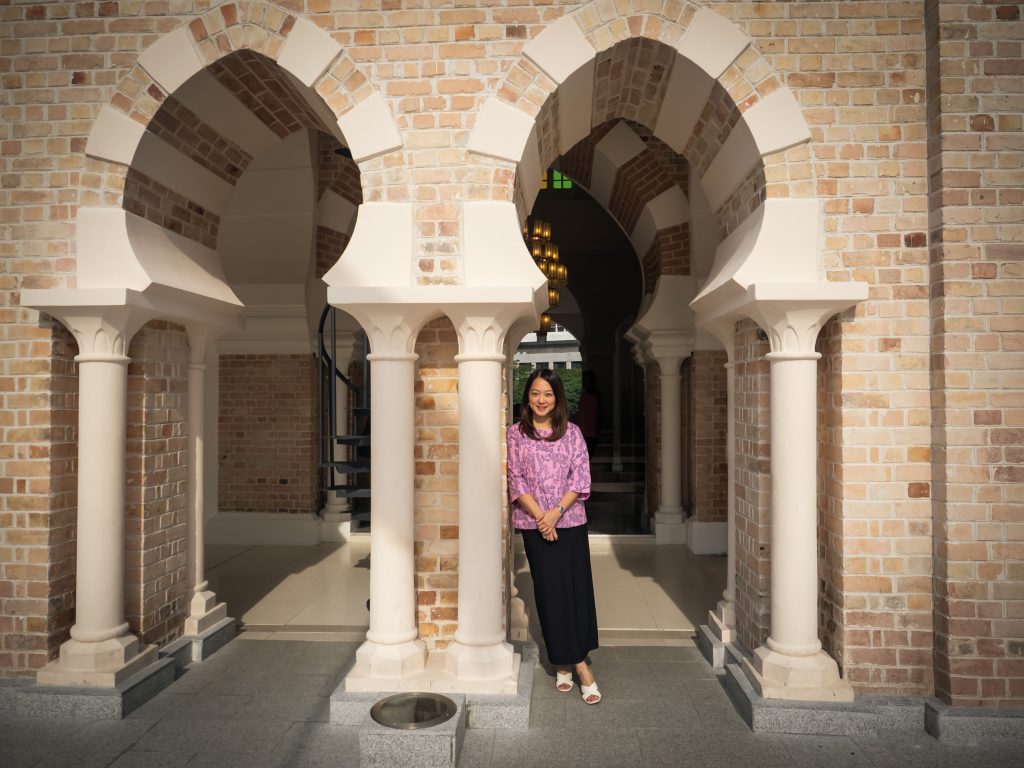
She suggested Bangunan Sultan Abdul Samad for our portrait session, and the reasons, when she explained them, turned out to be layered in ways I had not anticipated.
She was called to the bar here, as a young lawyer. She later served as Speaker of the Selangor State Assembly, and this building, she reminded me, once housed that very assembly. When she became Federal Territories Minister, the building was at the tail end of a long refurbishment. The King was present for the official launch. The Sultan of Selangor also visited subsequently. She stood in a place that had held multiple chapters of her life simultaneously, a building whose history had somehow kept pace with her own.
“It is more than a building,” she wrote, when I asked her about it. “It carries memory, identity, and a sense of continuity in the heart of Kuala Lumpur.”
What moved her most about the refurbishment was not what had been added, but what had been preserved. They did not replace the bricks. They cleaned them. A building that had looked worn and forgotten, given careful attention and a second chance, had come back to something beautiful. She did not need to spell out the parallel. Same like life, she said simply.
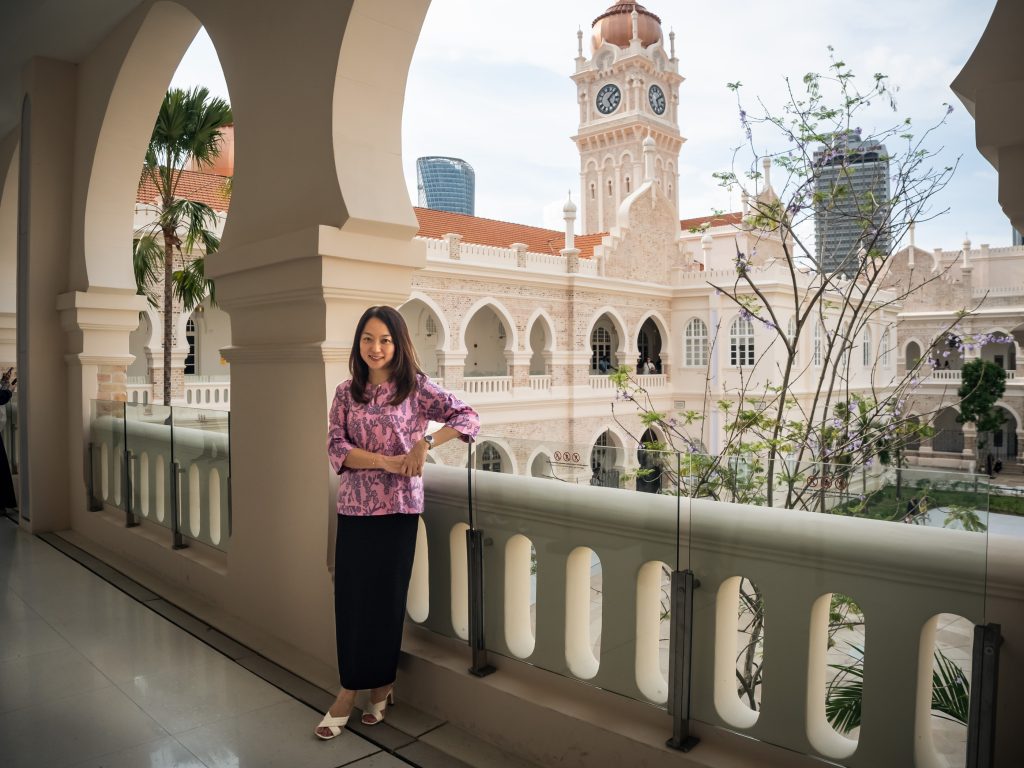
“Being its custodian means making sure the public can feel that this city belongs to them. A historic building should not be frozen away from people. It should remain alive, relevant, and open to the public who gave meaning to it in the first place.”
Standing on the balcony of Bangunan Sultan Abdul Samad, looking out over Dataran Merdeka in the evening light, it is easy to understand why she chose it. It is a place that holds things. Memory, history, the long argument about what this city is and who it belongs to. And Hannah Yeoh, a Subang Jaya girl who grew up renting, is now the person responsible for the answer.
Public life, she has learned, tests you in ways you do not expect.
Not just the difficulty of it, the long hours, the scrutiny, the weight of decisions, but something quieter and more corrosive. It can tempt you, she says, to become louder than necessary. Harder than you should be. To let the noise of public opinion slowly reshape who you are until you no longer quite recognise yourself.
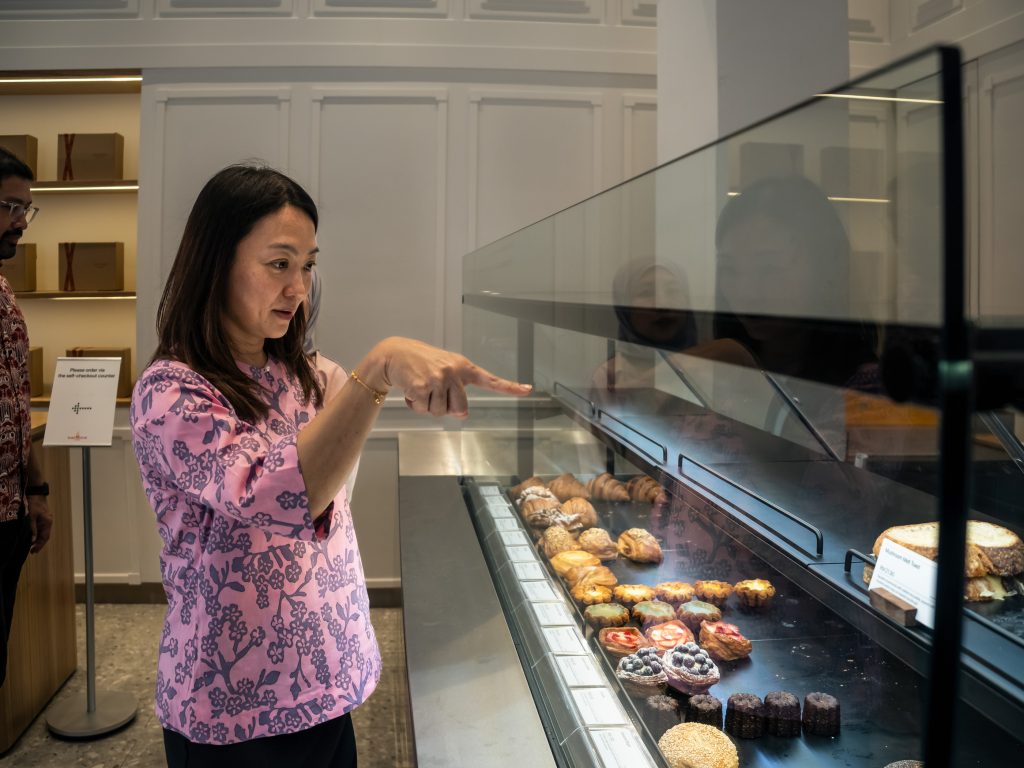
“I have learned that it is important to stay grounded, to keep your values consistent, and not to let the noise define who you are.” She has held on to three things through all of it: integrity, humility, and a clear sense of purpose. The same things, more or less, that a printer from Subang Jaya once tried to press into his daughter’s palm.
For the generation growing up in Malaysia now, she hopes for courage, kindness, and a sense of belonging. She hopes they do not become cynical too quickly. And she hopes they understand something she has had to learn the long way: that the future of this country “will not be shaped by perfection. It will be shaped by people who still care enough to build, to improve, and to keep going even when it is not easy.”
A father on one income. A ruler. A lesson that became a life.
Hannah Yeoh has been holding on to it ever since.
_ _ _
Hannah Yeoh is the Federal Territories Minister of Malaysia.
This portrait is part of Born in Malaysia – How We Hold On, a photography and storytelling project by Kenny Loh.
The Table He Set For Us

I arrived in Melaka two days before the Tok Panjang.
The day before the dinner, I went to the market for ingredients. I moved from one stall to another, picking what was needed, vegetables, meat, things that would later find their place on the table. It still felt far away from the meal itself.
That same morning, Elena Koshy from The New Straits Times arrived with Susan Ann Lai and her daughter. They had driven down from Kuala Lumpur, and we were all staying at a friend’s place.
Elena had written about Susan last year, about her growing up with her Malay neighbour, Hisham Idris, and the bond they shared.
It felt right that they were both here. These stories tend to find one another.
Elena had not come to Melaka by chance. Long before we arrived, I had already asked her to work on this story for The New Straits Times. Eng Leong had originally wanted to prepare the Tok Panjang just for Born in Malaysia, but I felt what he was doing deserved a wider audience. It was too rich, too rooted, to remain only within my own project.
Back at Eng Leong’s house, ingredients were cleaned and set aside. The cooking would only begin in the morning.

The house is a story on its own. As you walk in, the family altar takes up the reception area, the kind that commands the space rather than simply occupies it. Further in, past a wall, the house opens into a large area filled with light from a skylight above. Old Melaka houses were built long and narrow, and without that opening to the sky, the interior would have been too dark to live in. The light falling through it made the space feel both enclosed and open at once.
The photographs were mostly hung on the walls, wedding portraits of his parents and his grandparents, formal and still, the way photographs used to be. Faces that had been in this house for decades, watching the same rooms.
You don’t need anyone to explain it.
The next morning, I went straight to the kitchen.
Eng Leong was already working. The dishes were being cooked one by one, filling the kitchen as they came together. No instructions, no checking of recipes. Just a steady rhythm. The kind of cooking that comes from memory.

He did not cook alone. His auntie and his sister were there with him, both cooks in their own right. They moved around each other easily, stepping in when needed, stepping back when not. There was no need to explain anything. It was already understood.
I stood there for a while, watching.
There is something about watching someone work like that. You start to notice the small things, the way he leans forward, the pause before something is done, the quiet confidence in every movement.
Before anyone sits down at the table, most of the story has already happened.
That evening, the Tok Panjang was held at a private museum along Jonker Street.
Eng Leong arrived in batik, transporting the food he had prepared earlier with the help of his two sisters. The dishes did not arrive plated. They came in pots and large serving plates, carried in, unpacked, and only then heated up and plated.
By the time everything was set, the space had already taken on its own presence. The long table arranged, the room holding everything together, the altar at the far end, photographs on the walls. It did not feel like something arranged for the night. It felt like something that had always been done this way.

When the meal began, the table came alive.
People reached across one another. Food was passed without asking. Conversations started and overlapped. No one directed it. It found its own rhythm.
From the outside, it looks like a meal. When you’re there, it is something else.
There was one dish on the table that stayed with me.
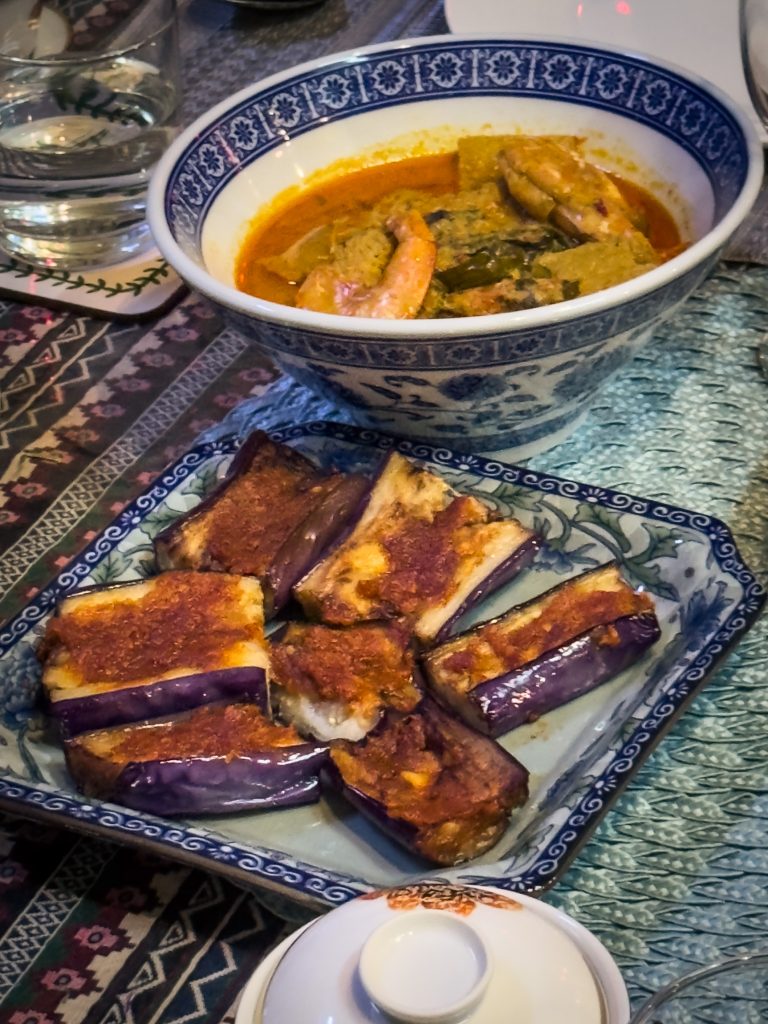
Eng Leong told me he learnt it from his Kong Ngah, his paternal aunt, many years ago, after he had just been retrenched and was trying to start over with a small Nyonya food stall in Petaling Jaya. He did not have the chance to learn it from his mother. She had already passed on.
So his Kong Ngah came over to teach him, patiently, step by step.
He spoke about the dish as something simple, but it isn’t. The aubergine has to be cut a certain way and fried until soft. The sambal has to be cooked slowly until the oil separates, the flavours coming together without rushing it. These are small things, but they matter. They are what make the dish what it is.
Listening to him, you begin to understand that what we were eating that evening was not just food. It was something carried forward, from his Kong Ngah, and from his mother, in a different way.
Halfway through the evening, Eng Leong stood beside the table and spoke about his mother, about how much of what we were eating came from her, the recipes, the way things were done.
The room quietened. People listened.
You could hear it in his voice. Not just what he said, but how he said it. The weight of it.
I felt it too.

Then, sometime in the second half of the evening, he stepped away and returned in chef’s whites.
It was more than a change of clothes. When he walked back in, something had settled into place. The batik had carried the earlier part of the evening, the son, the family, the inheritance on the table. The whites said something different. They said: this is also a craft. This is also a discipline. He was not just someone cooking his mother’s recipes. He was a professional who had spent years learning what it means to do this properly, and that too was part of what we were eating.
Both were true at once. That was the point.

I spoke to him later, quietly. I told him his mother would have been proud of him, the way he has carried it forward, not just cooking the dishes, but keeping something of her alive in them.
I moved around the table for a while, taking a few photographs, then stepping back again. There is always that balance, being close enough to see, but not close enough to interrupt.
At one point, I stood further back and just watched. The whole table in front of me, people settled into the evening, the movement, the noise, the small moments that don’t ask to be noticed but stay with you anyway.
These are the moments I find myself returning to in Born in Malaysia.
Not events. Not performances. Just the way things continue, quietly, without needing to be explained.
Before I left, I took a quick photograph with them, just a small record that I was there, inside it, not just looking in.
This Melaka story will become part of the next Born in Malaysia.
I am still gathering it, one place at a time.


She is Lyia Meta

Who Would Ever Think She Is Kristang?
In Malaysia, people assume she is Malay. Sometimes Indonesian. Occasionally Filipina if they venture a bit further. In Los Angeles, she blends into the city’s endless mix of faces. Polynesian, broadly Asian, something familiar but not quite placed. In Texas and Nashville, they think she is Mexican or Hispanic. She lets it sit, mostly. These days, unless it actually matters, she does not correct it.
Then she opens her mouth.
Not to sing. Just to speak. And everything shifts.
The voice does not match the assumption. The English that comes out is precise, unhurried, completely at ease. People recalibrate. You can see it happen in real time.
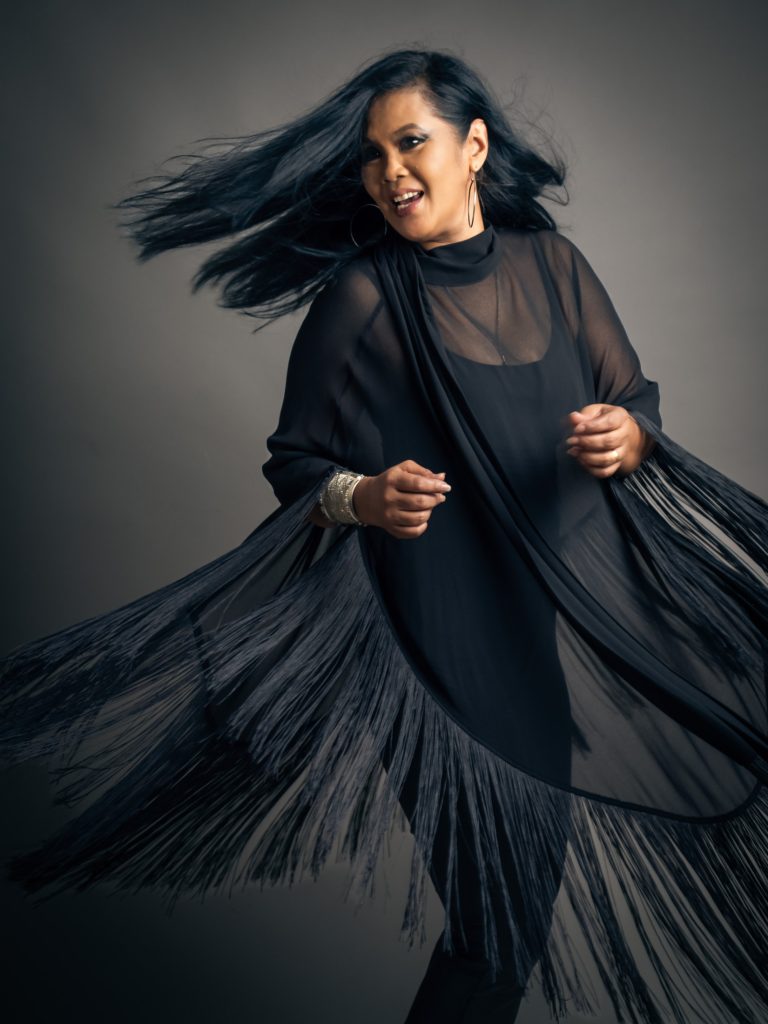
I first photographed Lyia Meta in 2014. That was for her first album. We have stayed connected over the years, the way you do with people who leave an impression, crossing paths on social media, keeping track of each other from a distance. When I finally had her back in front of my camera recently, eleven years had passed.
A lot had happened in eleven years.
She is Malaccan Kristang. One of Malaysia’s oldest and smallest communities, descendants of Portuguese settlers who arrived in Malacca in the sixteenth century and stayed, intermarrying, absorbing, becoming something entirely their own. The Kristang carry a creole language, a music tradition rooted in storytelling and rhythm, a history that most Malaysians could not tell you much about.
Lyia does not lead with this. It is not the first thing she mentions, not the banner she waves. It is simply one of the layers. One of many.
“It shapes how I connect to story, emotion, and community,” she tells me. “But it’s not the whole picture. Just one of several layers that make up who I am.”
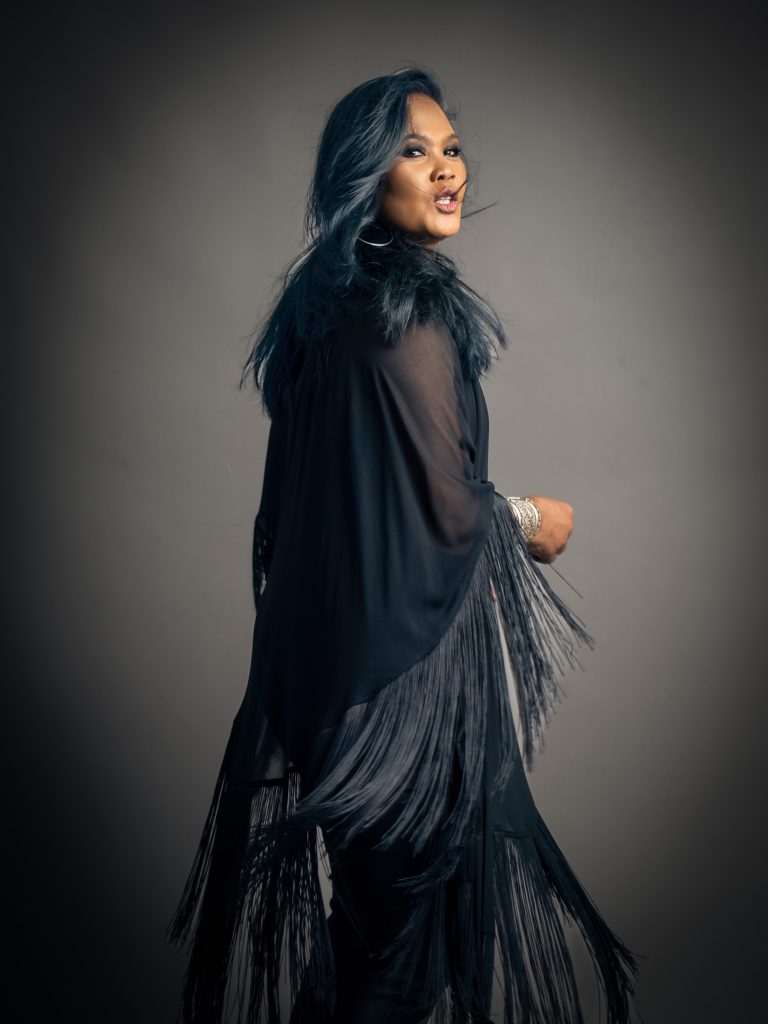
Her father played and sang the blues at home. But more than that, he was the lead singer for the famed Kilat Band from Malacca back in the 60s. Rock too, but at home it was mostly the blues. So in a sense, the music found her before she found it. By the time she opened her mouth to sing, it was already there.
Jazz came later, and by surprise. She had avoided it for years. Did not expect it to feel so natural when she finally stepped into it. But blues is at the root of jazz, and she had been living with blues her whole life without knowing that was what it was.
“Over time,” she says, “it felt less like I was discovering something new, and more like I was recognising something that had already been there in me.”
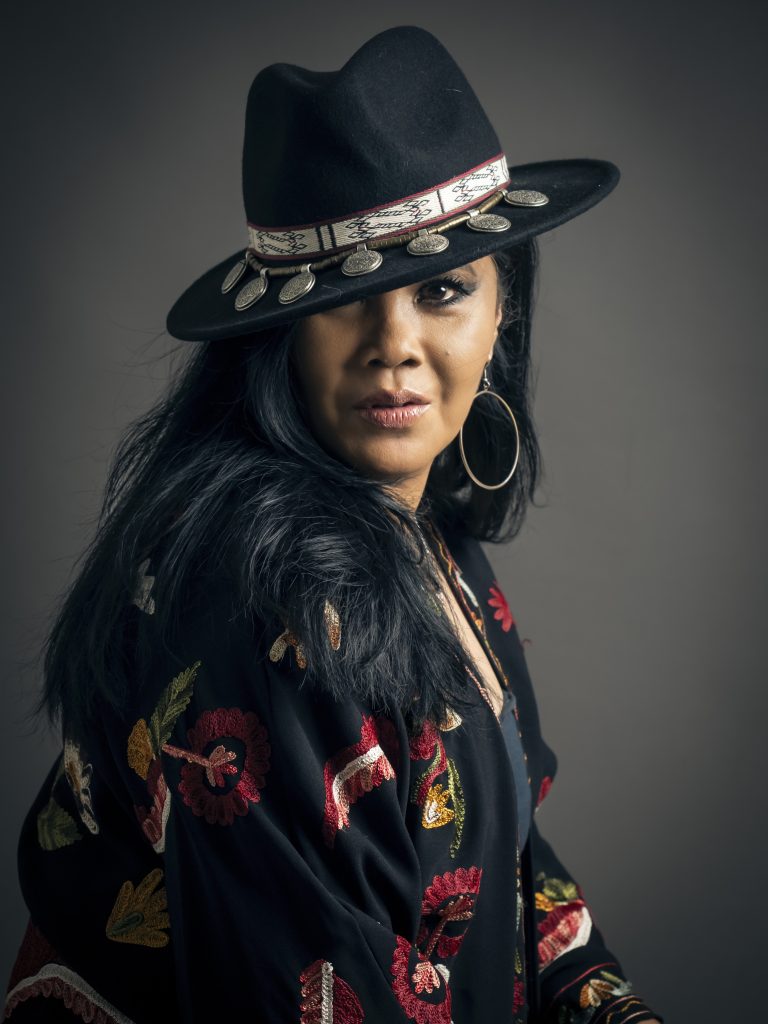
During the shoot, she mentioned she also sang country. I was not expecting that. I put it on Spotify there and then. She was really good. Not good for a Malaysian. Just good.
So good, apparently, that she went to Texas and proved it. She won Entertainer of the Year and Vocalist of the Year two years running at the Texas Sounds International Country Music Awards, beating artists from over fifteen countries. The kind of result you don’t explain away.
The range keeps going. She has lent her voice to a Brazilian collective, appeared on an album by three-time Grammy-winning artist Ricky Kej, and was the featured artist on a track from a Grammy-nominated album in Contemporary Blues. Two full-length albums. Five EPs. Twenty-seven singles. Two books, with a third on the way.
I am not listing these to impress. I am listing them because they point to something. The woman does not stop. She does not stay in one place long enough to be defined by it.
“I think the not belonging is the point,” she says. “Or maybe it is belonging everywhere a little, but not fully anywhere. Over time, that in-between space becomes its own kind of home.”
I think about the woman I first photographed in 2014. She was still figuring out how she wanted to be seen. Still negotiating between who she felt she was inside and what she thought people expected. Careful. Holding back a little.
Now there is less of that.
“I am more aware of what I carry,” she says. “And I am more comfortable letting it show without trying to shape it too much or soften it. It is not just confidence. It is clarity.”
That clarity shows up in front of a camera. She is not managing the moment anymore. She steps into it.
When I look at the portraits from our recent session, I see someone who has stopped explaining herself. The voice that confounds every assumption, the face that no one can quite place, the heritage that most people have never heard of. None of it needs resolving.
She is Kristang. She is Malaysian. She sings blues and jazz and country and symphonic rock. She writes books about resilience. She wins awards in Texas. She gets mistaken for Mexican.
She is Lyia Meta.
Who would ever think she is Kristang?
After spending time with her, the better question is: who else could she possibly be.
Three Carpenters
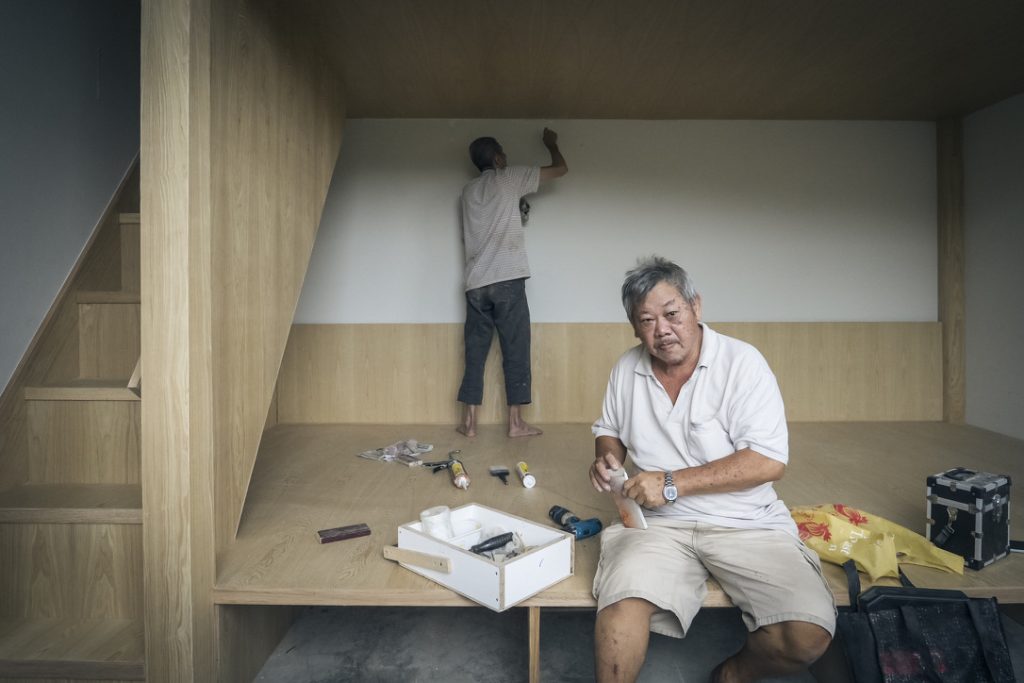
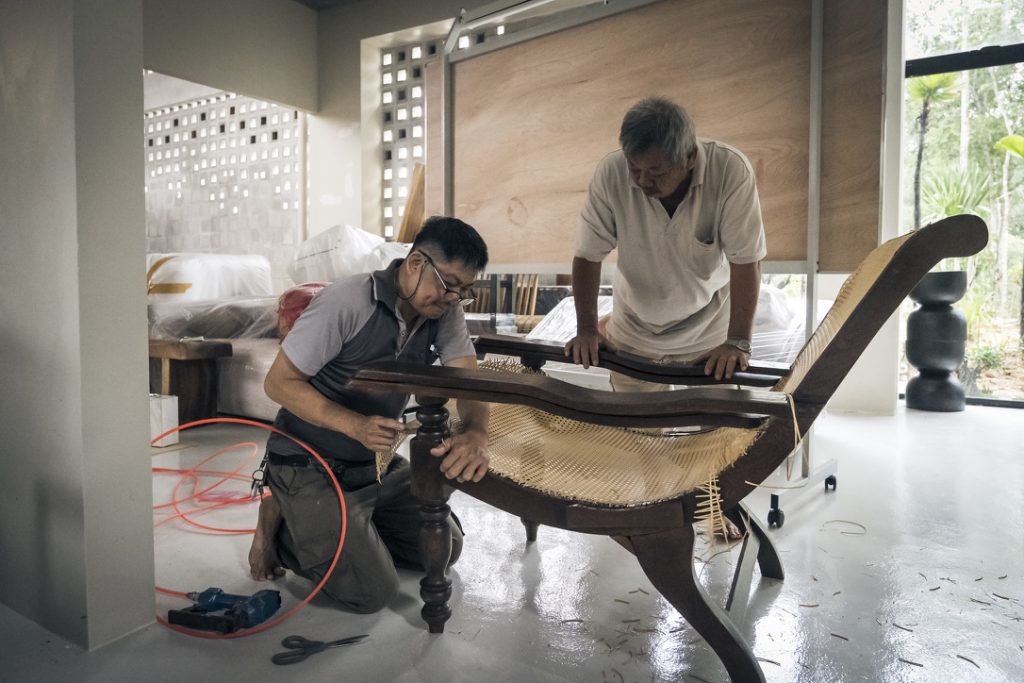
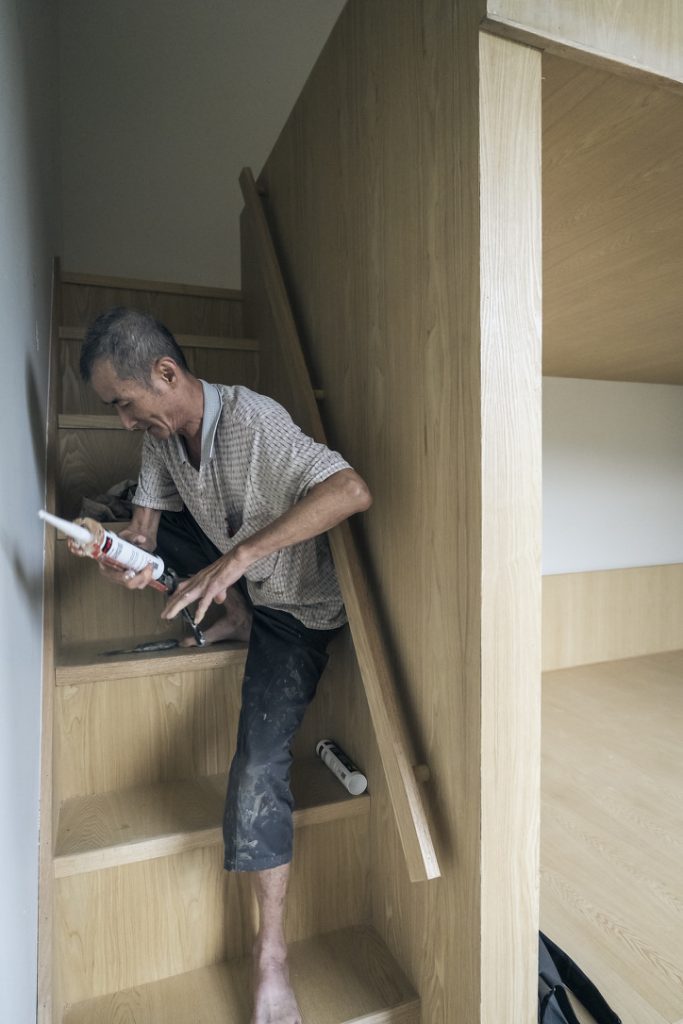
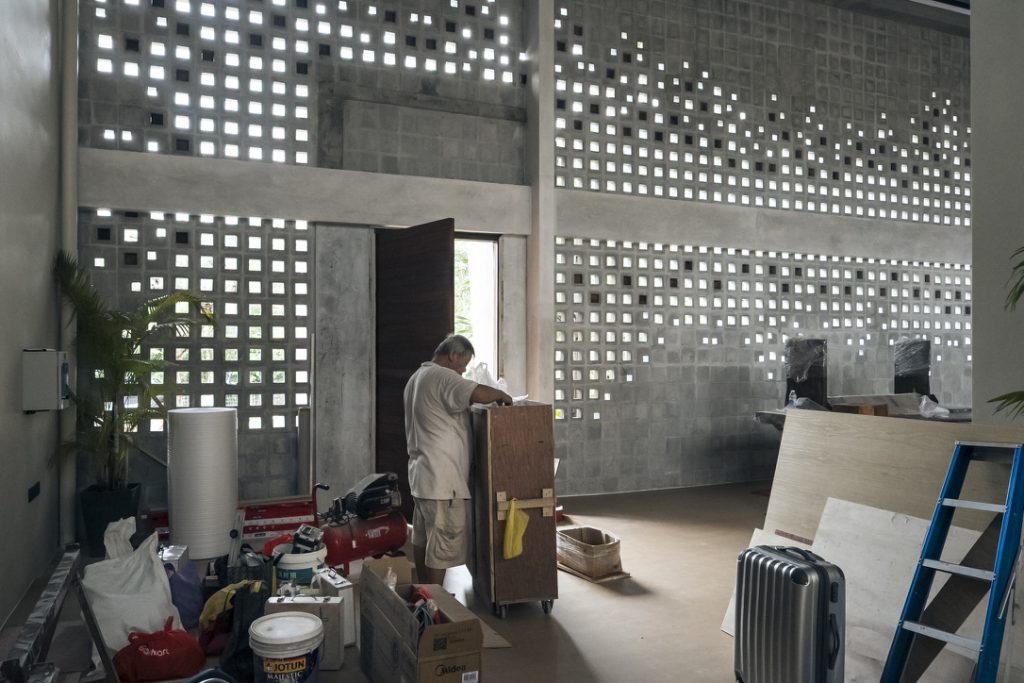
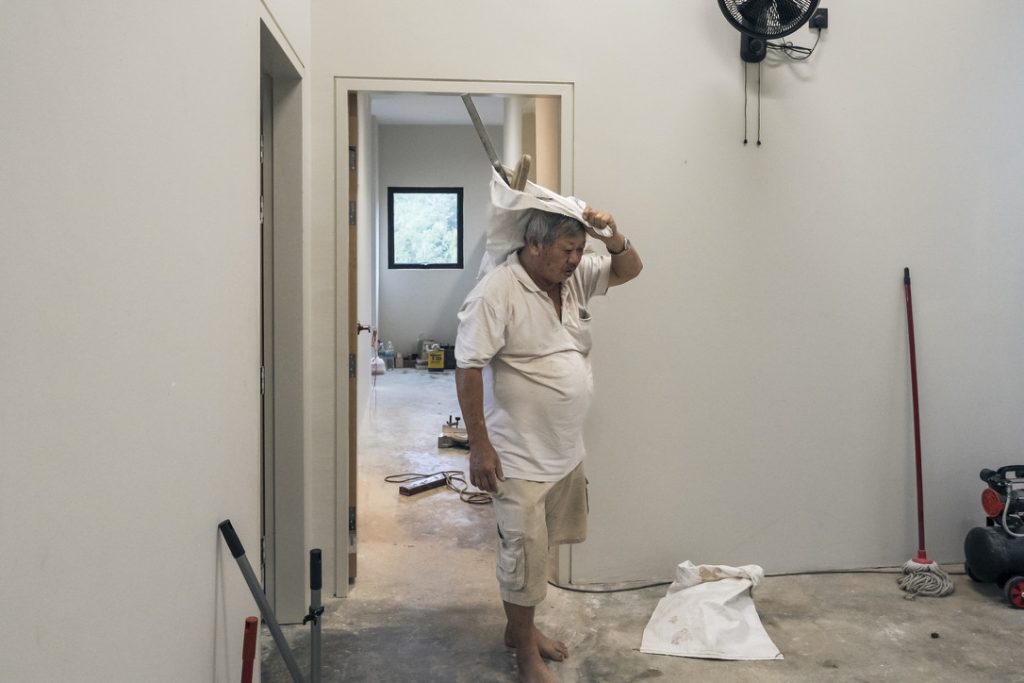
They arrived each morning in an old Proton Wira. Phang, 62. Siew, 59. Yip, 65. Three carpenters of different shapes, different temperaments, different rhythms. What they shared was time. Decades of it. Years spent building side by side, learning one another not through conversation alone, but through repetition. The job that brought them here was 2 Rivers, an ecolodge in Tanjung Malim managed by Djungle People, built between two rivers and wrapped in forest. The kind of place that asks a great deal of the people who build it.
Every day, they drove one and a half hours from Kuala Lumpur to Tanjung Malim, long before the site stirred. The same car. The same seats. The same road unfolding and folding back into itself. One can imagine the conversations inside that Wira. Practical at first, then drifting. Traffic. Weather. A job done badly somewhere else. A joint that didn’t sit right yesterday. Sometimes silence, thick and companionable. Sometimes laughter. Sometimes disagreement that never quite hardened into anger. By the time they arrived, the day had already been negotiated.
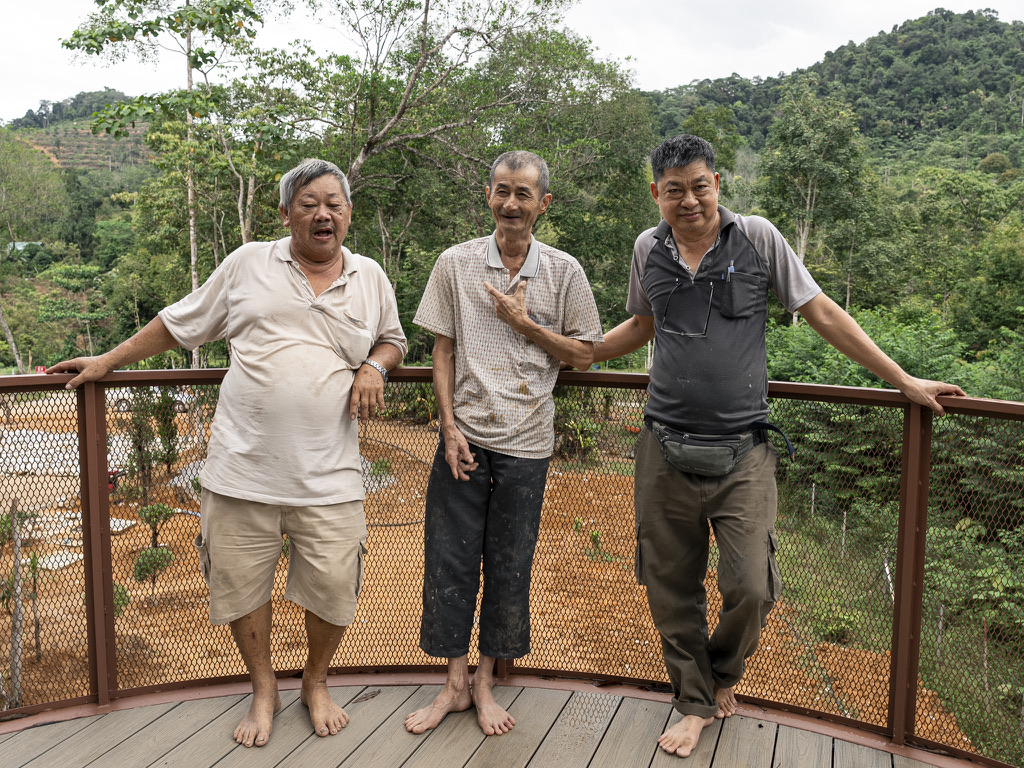
Phang was the leanest of the three, light on his feet, almost spare in the way he moved. Siew, more muscular and solid, carried himself with the confidence of someone used to lifting, bracing, anchoring. Yip, rounder and softer in build, was the warm centre of the three. Smiling easily, watching carefully, speaking when something truly needed to be said.
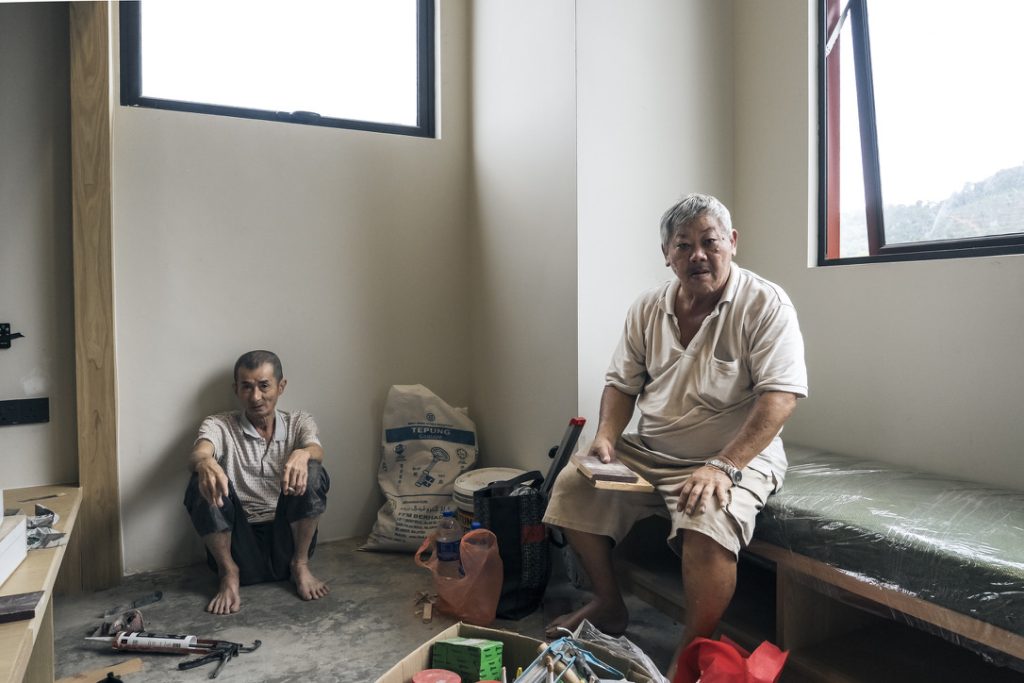
There was no ceremony to how they worked. No instructions barked, no plans constantly consulted. They flowed around one another with the ease of men who had learned each other’s habits long ago. When one reached for a tool, another was already stepping aside. When something went wrong, voices rose briefly, then fell just as quickly. The work resumed. This was not harmony born of politeness, but of familiarity.
At the retreat in Tanjung Malim, built between two rivers and wrapped in forest, their task was nearly complete. The final days were no longer about construction, but inspection. They walked slowly through the site, fingers brushing railings, eyes lingering on joints and edges. They noticed things no one else would ever see. Small imperfections, quiet alignments, places where wood met wood and time would eventually leave its mark.
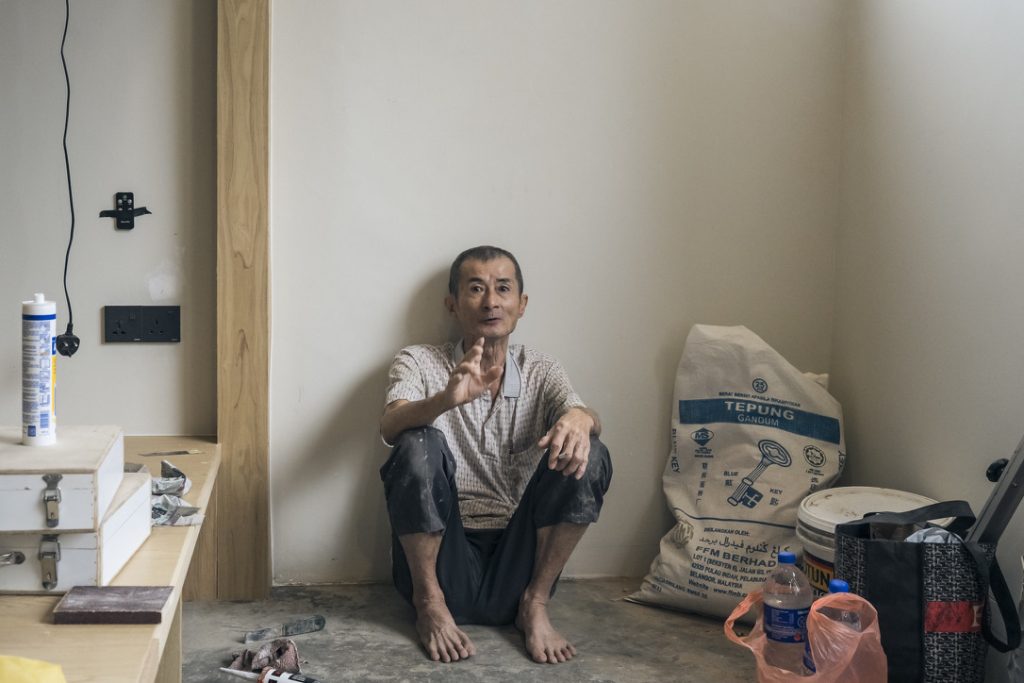
In the first days, they had pushed raw materials themselves. Heavy loads up to the first and second floors, bodies insisting they could still do what they once did. Eventually, strain made itself known. Younger men on site stepped in to help, without discussion, without embarrassment. On sites like this, respect does not need explanation. When three uncles have already given everything they can, help arrives quietly.
When asked to stand together for a photograph on the balcony overlooking the forest, they refused to put their arms around one another. The suggestion horrified them. They laughed, waved it away. Touch, for men like these, was functional. A hand steadying a beam, a shoulder taking weight. Anything else felt unnecessary, even exposing. Their closeness had already been proven through years of shared labour and thousands of kilometres in the same car.
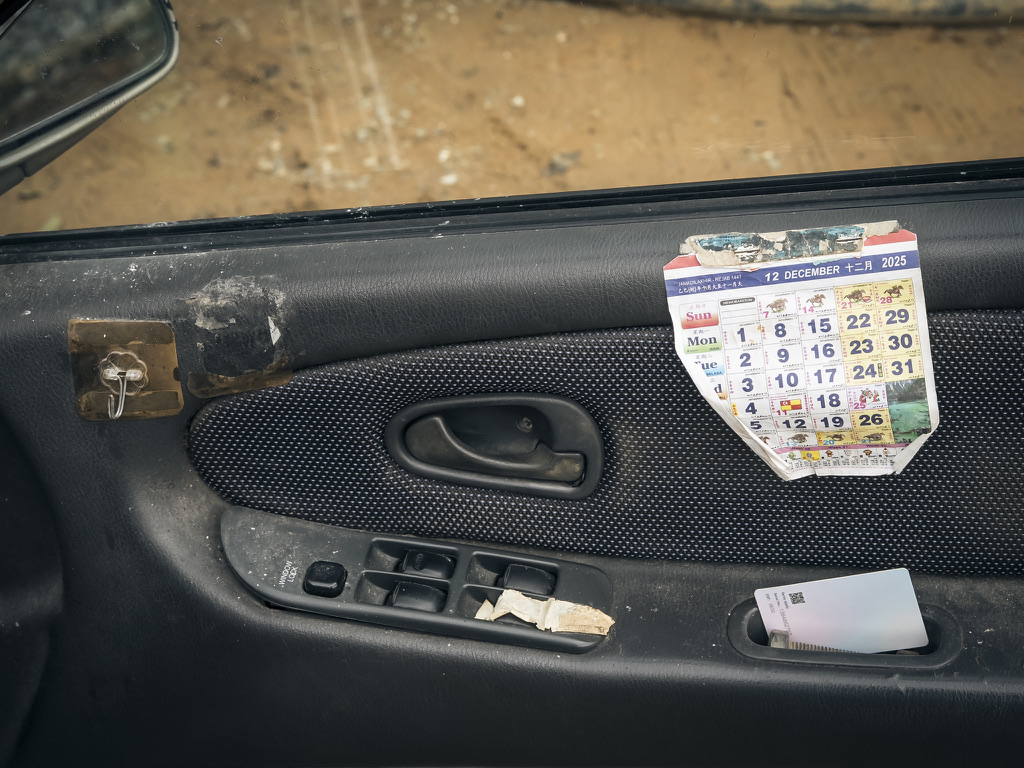
Inside their Proton Wira, the same thinking prevailed. A wooden console they had built themselves sat near the handbrake. A phone holder fashioned from plastic pipe and wood was fixed to the dashboard. A phone number, written on a small piece of wood, rested in plain sight in case the car ever blocked someone. A Chinese calendar for December was taped to the door. Not decoration, but reference. Time mattered. Dates mattered. Work mattered.
It was Yip who answered when asked what it felt like to build beautiful things without staying to enjoy them. He smiled, thought for a moment, then spoke simply. Enjoyment was not the point. Satisfaction came from knowing the work was done properly. That it would hold. That others would use it long after they had left.
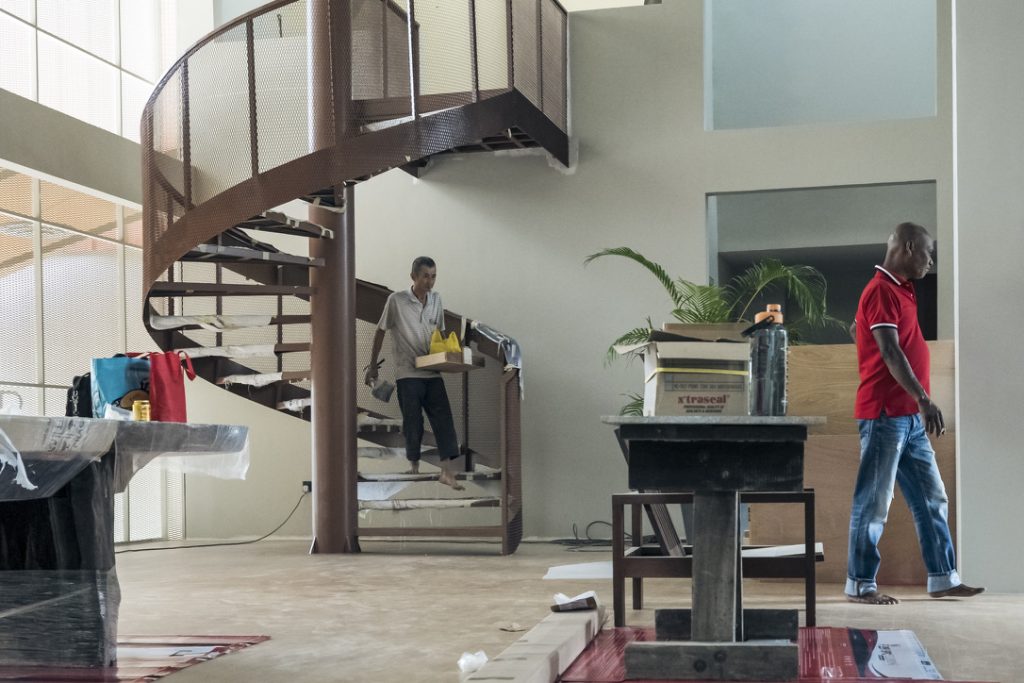
They build beautiful things for other people. And for themselves, they build only what is necessary.
By the end of the day, Phang, Siew, and Yip would return to their car and begin the long drive back to Kuala Lumpur. Another site finished. Another place left behind. The forest would remain. The structure would remain. And somewhere on the road home, the conversation would continue, until the next morning, when it all began again.


Merdeka 2024: Photographer Kenny Loh explores Malaysia’s rich and diverse culture through his “Born in Malaysia” series